
Chambersburg, PA · Garage Door Service
Noises That Mean Something: A Chambersburg Homeowner's Guide
A guide for Chambersburg homeowners on which garage door sounds point to real wear in this area's 1960s-70s housing stock and cold winters, and which can wait.
- Repairs & new doors
- Springs & openers
- Serving 6 nearby communities
What Is Going On
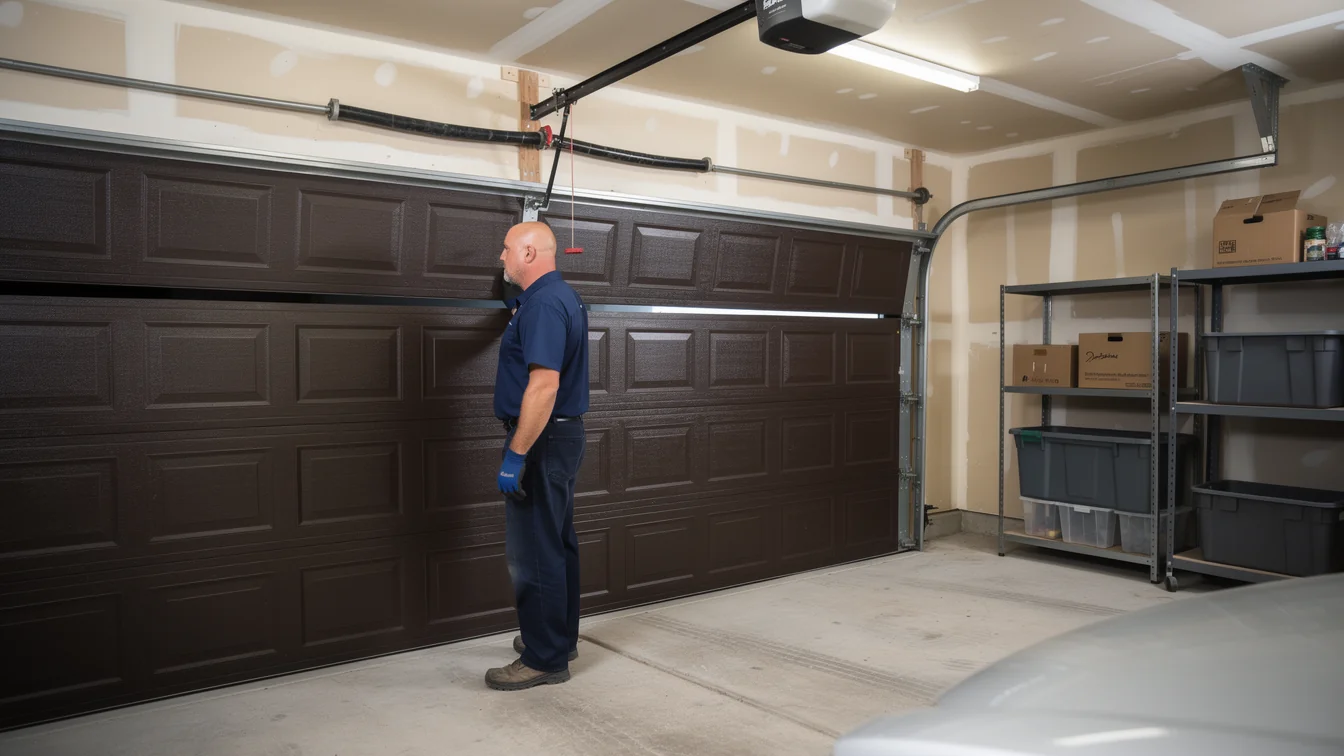
Most of the housing stock across Chambersburg's named areas went up between 1938 and 1998, with the median landing around 1970. That matters here because a lot of the springs, openers, and track hardware on these doors are original to houses now pushing fifty or sixty years old. A grinding sound on the way up is usually a roller that's worn flat on one side, something common on doors from that 1960s-70s wave of construction that never got the nylon roller upgrade. A loud bang partway through the cycle is almost always a torsion spring giving out, not the opener. A rhythmic thump every few feet points to a bent track section or a hinge that's loosened over decades of use. The age of the stock here is the reason these calls cluster the way they do: newer builds in other parts of the state don't see this pattern of worn torsion hardware and original rollers at this rate. If your door squeals specifically in cold weather and quiets down once it warms up, that's not the hardware failing - that's grease doing what old grease does below freezing.
What It Costs
We're not going to put a number here we can't back up, because what a noise costs to fix depends entirely on what's making it - a roller swap and a spring replacement are not the same job, and we don't want to quote one price and deliver another. What we can tell you is what drives the cost locally: across the roughly 16,825 owner-occupied houses in this service area, the age of the hardware is the biggest factor in whether a repair is quick or involved. A door that's never had its springs replaced since a house built in 1970 is going to need more than a roller - torsion springs have a service life, and most in this area are well past it. With a median household income of $74,723 across the service area, a lot of owners choose a full hardware refresh over chasing one part at a time once a door's hardware starts failing in sequence. Call and describe the sound specifically - when it happens, how loud, which part of the cycle - and we can tell you roughly what you're looking at before a truck shows up.
When Waiting Is Fine
Not every noise is a call-today noise. A faint squeak on an otherwise smooth cycle, especially right after a cold snap, is often just grease that's stiffened up - run the door a few times and see if it works itself out before you worry about it. A door that's slightly louder in January than it was in August isn't failing, it's reacting to the cold the way steel track and springs do in this climate band every winter. If the noise is new, mild, and the door still opens and closes at a normal speed with no hesitation, you can watch it for a week or two rather than scheduling anything. What you shouldn't wait on: any loud bang, any grinding that's gotten worse over a few days, or a door that stutters or reverses on its own. Those point to a spring or cable under failing tension, and tension failures don't wait for a convenient day. We'd rather you call us about something that turns out to be nothing than sit on something that locks your car in the garage on a cold morning.
What the Weather Here Does to It
Chambersburg sits in a climate band the federal data marks as cold and severe, and that's not a minor detail for a garage door - it's the reason certain noises show up here on a schedule. Steel torsion springs lose a measurable amount of tension as temperatures drop, and track hardware contracts just enough in a hard freeze to loosen bolts that were snug in July. That's why so many calls about new groaning or banging land in the first real cold stretch of the season rather than evenly across the year. Houses here built in the 1960s and 70s, which make up a large share of the 22 named areas we work across, often still have the original steel track and springs, and that hardware has been through fifty-plus winters of this same freeze-thaw cycle. Lubricant that worked fine when the house was built has usually been replaced a few times over, but the metal fatigue underneath hasn't been addressed unless someone's actually swapped the spring. If your door's noise shows up only below a certain temperature, that's your clearest sign the hardware is near the end of its life, not just cold.
Frequently asked questions
My garage door started banging loudly this week, is that an emergency?
Yes, treat it as one. A loud bang on a cycle, especially in a house with original 1960s-70s hardware, is almost always a torsion spring breaking or about to break. Don't try to open or close the door again - call before you use it, since a broken spring under remaining tension can be dangerous to work around.
Why does my door only squeal in winter?
Cold stiffens the grease on rollers and hinges, and steel track contracts slightly in hard freezes, which is common in this climate band. If the squeal goes away once the weather warms, it's usually not urgent. If it persists into spring, the hardware itself may be worn, not just cold.
Is it worth replacing springs on an older door or should I replace the whole door?
Depends on the rest of the door's condition. If the panels and track are sound and it's just the spring, a spring swap makes sense. If you've got a door original to a house built decades ago with worn track, bent panels, and an aging opener all at once, replacement often makes more financial sense than piecing it together.
Related garage door services in Chambersburg
More garage door guides
Book garage door service in Chambersburg
Call now or request a quote - tell us what the door is doing and where you are.