
Chambersburg, PA · Garage Door Service
Garage Door Opener Repair for Chambersburg Homes
Opener repair for Chambersburg homes built mostly between 1938 and 1998, where cold winters and original hardware combine to wear out drive gears and logic boards early.
- Repairs & new doors
- Springs & openers
- Serving 6 nearby communities
Where This Job Goes Sideways
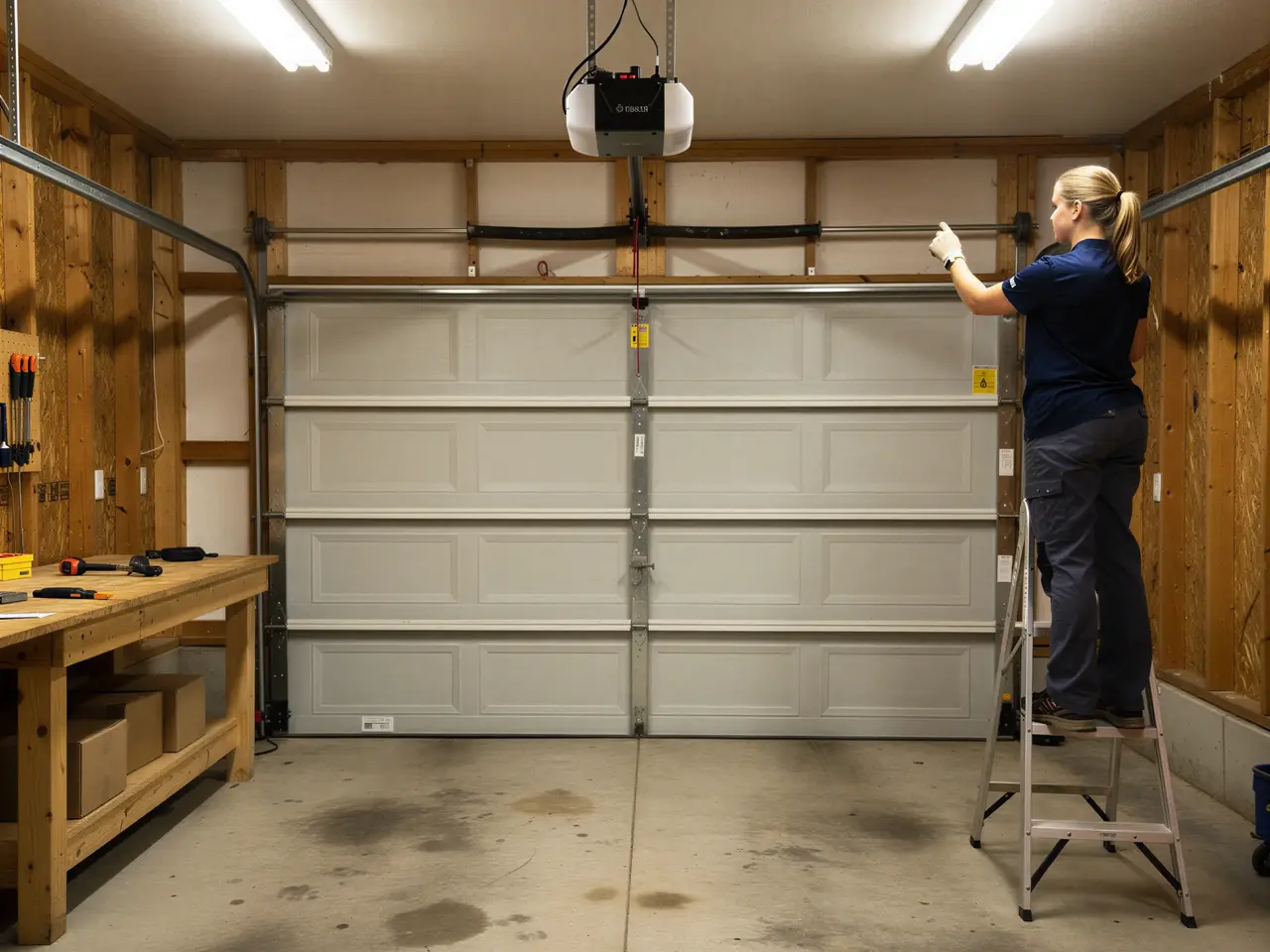
Opener repair looks simple until you're under the unit with the cover off. Most calls start the same way: the opener hums, clicks, or runs the motor but the door doesn't move. People assume it's the opener itself, but across the Chambersburg service area - a mix of 22 named communities with housing built mostly between 1938 and 1998 - the opener is often the last part to fail, not the first. A worn spring or a track that's walked out of alignment puts extra load on the drive gear, and the gear strips long before anyone notices the spring is the real problem. We open the unit, check the drive mechanism, and look at the door hardware behind it before we touch a logic board or a circuit. Where it goes sideways is when a repair gets done on the opener alone, the door's mechanical fault never gets flagged, and the new gear or board fails again in a few months under the same load it was never built to carry. Our limitation here is straightforward: we don't swap an opener head and ignore a bent track or a spring near end of life, because that call gets you a second service visit, not a fix.
What It Costs
We don't quote a number without seeing the unit, because the range between a sensor realignment and a full logic board replacement is wide, and guessing on the phone wastes your time and ours. What we can tell you is what drives the cost: whether the fix is electrical (sensors, wiring, circuit board) or mechanical (gear, drive belt, chain), whether parts are stocked locally or need to be ordered for an older opener model, and whether the opener is original to a house built decades ago versus a newer replacement unit. Given the age of housing stock in this area - a lot of it dating to the 1960s and 70s - we see a fair number of openers that are themselves older units nearing the end of a normal service life, where repair cost starts to brush up against replacement cost. We'll tell you flat out when that's the case instead of patching a unit that's going to need the same visit again next winter.
Why This Fails Locally
This area sits in a severe cold climate band, and that matters more for openers than people expect. Cold doesn't just stiffen grease in the drive mechanism - it shrinks metal, tightens tolerances in the gear housing, and makes a chain or belt that's already a little loose jump or bind on startup. On houses built in the 1938-1998 window that make up most of the stock here, original openers and even first-replacement units weren't engineered around today's cold-weather lubricants or sealed gear housings. So the failure pattern is predictable: a unit that worked fine in September starts grinding, hesitating, or tripping its safety reversal once overnight lows drop hard. It's not random bad luck with a particular brand - it's 50-plus-year-old garages paired with openers under real winter load, year after year. A newer opener in a newer garage in a mild climate wouldn't show this pattern nearly as often.
How It Shows Up
The call usually starts with one of a few symptoms: the opener runs but the door doesn't lift, the remote works intermittently but the wall button doesn't, or the door opens partway and reverses on its own. In the cold months especially, we hear about units that worked the night before and won't respond at all by morning - that's often a strained gear or a chain that's lost tension overnight as metal contracts. Across the roughly 16,825 owner-occupied houses in this service area, a good share still run openers that are original or first-generation replacements, so the symptom set repeats house to house: stripped nylon drive gears, worn trolley carriages, and sensor eyes that have drifted out of alignment from years of garage temperature swings. If your opener has started making a new grinding sound before it fails outright, that's usually the gear telling you it's close to done, not the motor.
Frequently asked questions
Why does my garage door opener only act up in cold weather?
Cold tightens metal tolerances inside the opener's gear housing and stiffens the grease on the drive mechanism, so a gear or chain that's already a little worn starts binding or slipping once temperatures drop hard. It's a climate-driven stress on aging hardware, not a sign the opener is simply broken overnight.
Is it worth repairing an opener from the 1970s or 80s?
Sometimes, but not always. If the drive gear or logic board can be sourced and the housing isn't cracked, repair is often cheaper than replacement. If the unit is near the end of a normal service life and parts are hard to source, we'll tell you straight that replacement makes more sense than another repair visit.
My opener runs but the door won't lift. Is that the opener's fault?
Not necessarily. An opener motor running without lifting the door often points to a spring that's lost tension or a track binding under load, which overworks the drive gear. We check the door's mechanical side before assuming the opener itself is the failure point.
How often should an opener in this area get checked?
There's no fixed schedule in the facts we rely on, but given the age of housing stock and the severe cold winters here, a check before the hardest part of winter catches gear wear or sensor drift before it strands you with the door stuck down.
Related services
Related guides
By Neighborhood
Opener Repair across the Chambersburg area
We also handle opener repair in these Chambersburg-area suburbs.
Book garage door service in Chambersburg
Call now or request a quote - tell us what the door is doing and where you are.