
Chambersburg, PA · Garage Door Service
Garage Door Repair and Service in Chambersburg, PA
Chambersburg homes built 1938-1998 face cold-weather garage door failures tied to original hardware. See what breaks, what it costs, and why it happens here.
- Repairs & new doors
- Springs & openers
- Serving 6 nearby communities
Where This Job Goes Sideways
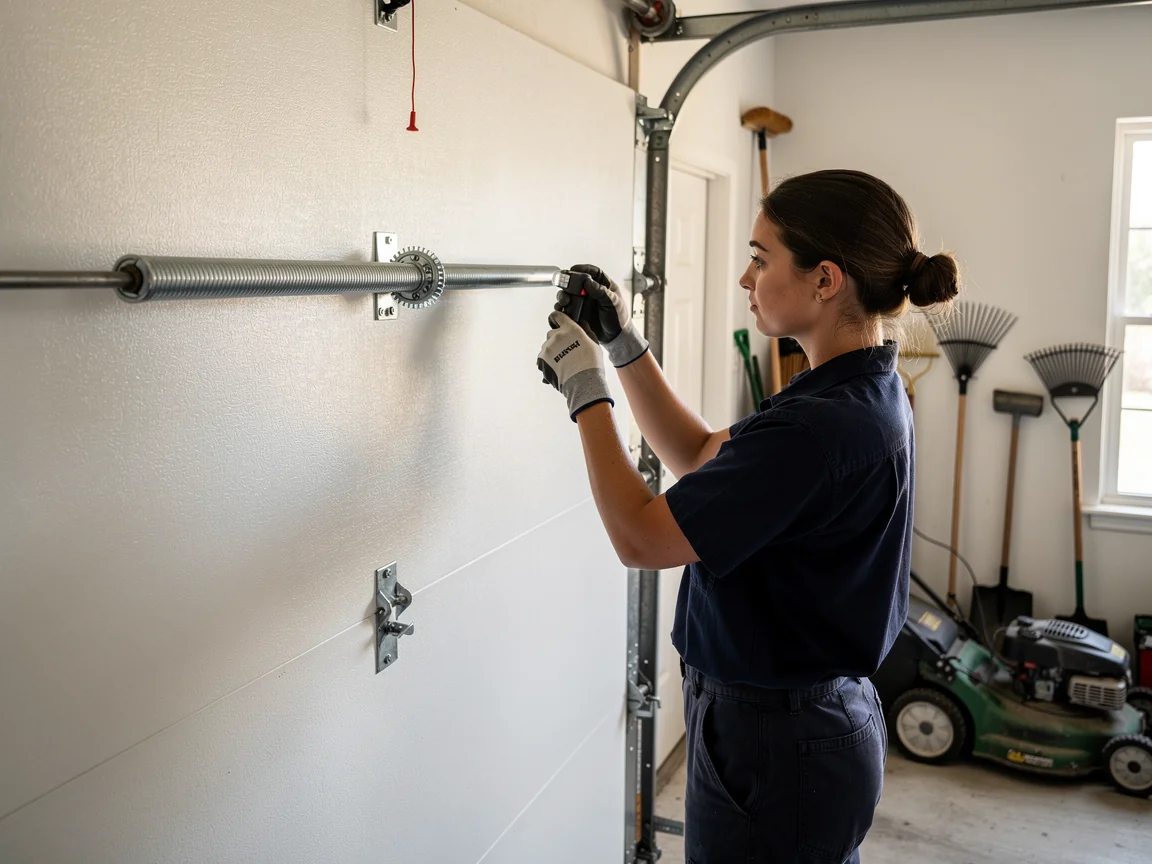
Most calls start the same way: a door that worked fine Tuesday won't budge Wednesday morning. On a lot of Chambersburg houses, that's a torsion spring that's been doing its job since the home was built somewhere between 1938 and 1998, with the median landing around 1970. A spring rated for a certain number of open-close cycles doesn't care what year it is on the calendar, and once it's near the end of that count, a cold morning is often what finally breaks it, not anything you did wrong. The other place this goes sideways is the opener. Houses from that same era frequently got a replacement opener bolted onto original track and hardware at some point over the decades, and the mismatch between old rail and newer motor shows up as grinding, slipping chains, or a door that reverses halfway up. We also see cable fraying on the drum side more in this area than you'd expect, because original hardware on 1960s and 70s builds wasn't always upgraded when the door panel was. None of this is dramatic until the spring actually snaps under tension, which is the one failure that can hurt someone standing nearby. That's the call that shouldn't wait.
What It Costs
We're not going to list a number here, because we don't have one that would be honest for your door. A torsion spring job on a single door is a different job than the same repair on a heavier double door, and what the opener needs depends on whether the track and hardware underneath it are original or already replaced. What we can tell you is that in a service area where median household income sits at $74,723, most owners we talk to want a straight answer on whether a repair is worth doing at all before they spend money on it, and that's a fair question to ask on the phone before a truck ever shows up. Sometimes the honest answer is that a 50-year-old door with a bent track and a dead opener is cheaper to replace outright than to keep patching, and we'll tell you that instead of running up a repair bill on a door that's going to need the next part in six months anyway. Get a number for your specific door and your specific fix before you plan around any figure you've seen somewhere else.
Why This Fails Locally
This isn't a generic garage door problem, it's a Chambersburg problem shaped by what's actually sitting in driveways here. The housing stock across the area runs from 1938 to 1998, with the bulk concentrated in the 1960s and 70s across the 22 named neighborhoods in this service territory. That means a lot of original one-piece doors, original torsion hardware, and openers that have been swapped at least once without anyone touching the spring or track underneath. Layer the climate on top of that: this area sits in a cold band classified as severe, and steel springs lose tension and get brittle with repeated freeze cycles in a way that doesn't happen the same way in a milder climate. A spring that's fine in October can be the one that lets go in January, right when you need the door to work for the truck or the school run. Towns like Guilford and Scotland, just a few miles out, share that same mid-century housing wave, which is why this failure pattern isn't unique to one street in Chambersburg, it's the whole generation of construction across this part of the county.
How It Shows Up
You'll usually notice it before it fully breaks. A door that used to rise evenly starts lifting crooked, higher on one side than the other, which is a sign one torsion spring is carrying more load than its partner. A loud bang from the garage, especially on a cold morning, is almost always a spring letting go, not something falling off a shelf. An opener that grinds, stutters, or reverses the door halfway through its cycle is telling you the motor is fighting old track or a cable that's starting to fray at the drum. If the door feels unusually heavy when you lift it by hand with the opener disconnected, that's your spring losing its tension gradually rather than snapping all at once, and it's worth a call before it does. None of these signs mean the same fix every time, and that's the point of having someone look at it rather than guessing from a list.
Frequently asked questions
Why did my spring break in the winter and not during the summer?
Cold makes steel more brittle and tightens tolerances on the coil, so a spring that's near the end of its cycle life is more likely to give out on a cold morning than a warm one. This area sits in a severe cold climate band, which makes that seasonal pattern more pronounced here than in milder places.
Is my garage door hardware original to the house?
If your house was built between 1938 and 1998, which covers most of the housing in this area, there's a real chance the torsion hardware is original even if the opener was replaced later. We'd need to look at the drum, cable, and spring together to tell you for sure.
Should I replace the door or just fix the spring?
That depends on the age of the track and opener underneath, not just the spring. If the rest of the hardware is original and already showing wear, replacing just the spring can mean another repair call within the year. We'll tell you honestly which situation your door is in.
By Neighborhood
Garage Door Service across the Chambersburg area
We also handle garage door service in these Chambersburg-area suburbs.
Book garage door service in Chambersburg
Call now or request a quote - tell us what the door is doing and where you are.