
Chambersburg, PA · Garage Door Service
Why a Chambersburg Garage Door Comes Off Track
A look at why garage doors in Chambersburg, PA slip off track, tied to the area's 1960s-70s housing stock and the cold-severe winters that move the hardware every year.
- Repairs & new doors
- Springs & openers
- Serving 6 nearby communities
What Is Going On
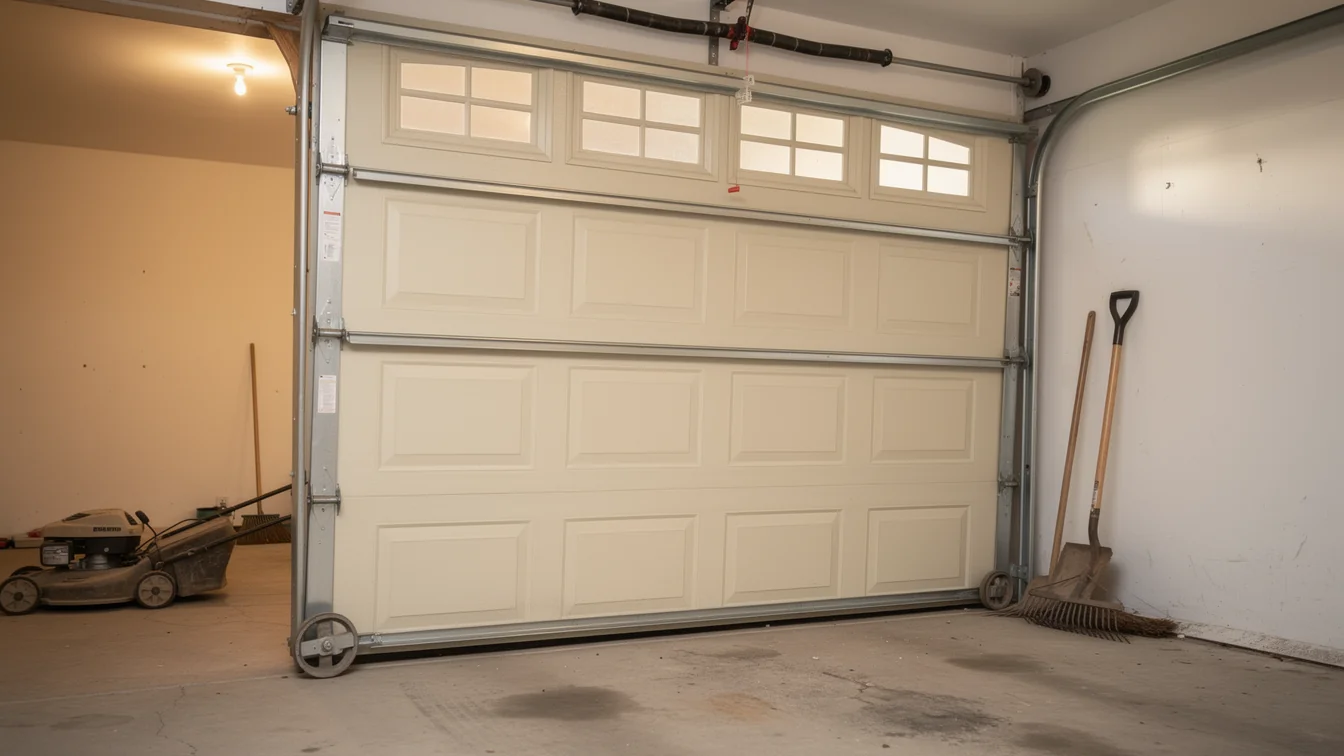
Most houses across this service area went up between 1938 and 1998, with the median landing around 1970, and the bulk of the stock across the 22 named areas here is that same 1960s-to-70s build. That matters for a track because it tells you what's bolted to the framing. Houses from that run almost always have the vertical track lagged straight into the jamb stud, not into a reinforced header the way later builds are done. Fifty-plus years of the door opening and closing works those lag bolts loose a sixteenth of an inch at a time, and once the bracket has play in it, the track starts to walk.
Once a bracket loosens, the roller stops riding the center of the track. It climbs the lip on one side, drags, and eventually jumps clean out when the door is lifted or dropped with any speed. On a lot of these original installs the horizontal track was also never leveled to today's tolerance, so the whole run has a slight rise or dip built in from day one. Add fifty years of settling and that small factory error becomes the reason the door binds at the same spot every single time.
A bent track from a car bumper or a dropped box does the same thing faster, but on houses this old, the slow version - loose brackets, worn rollers, a track that's drifted out of plumb - is the one we see walking into most of these garages.
What It Costs
I'm not going to put a number here. A loose bracket that just needs re-anchoring into solid wood is a different job than a track that's bent enough to need a new section, and I can't tell which one it is without putting a level on the door. What drives the cost is how many brackets have worked loose, whether the rollers are shot along with the track, and whether the door has to come off the track entirely to fix it.
That's the honest limitation on this page: nobody can quote a track repair accurately over the phone. A door that's merely rattled a bracket loose is a short visit. A door where the track itself has kinked, or where rollers have worn down to the point they're chewing the track lip, takes longer and costs more because parts come into it. If you want a real number, someone needs to look at the door in person - that's the only way to see which situation you're in.
When Waiting Is Fine
If the door still opens and closes smoothly and you've just noticed a roller riding slightly high on one side, that can wait. Snug the visible bracket bolts if they're reachable and keep an eye on it over the next few openings. A lot of the older houses in this area have had this exact issue sit stable for months once the obvious slack is taken up.
What can't wait is a door that's binding, grinding, or jumping the track partway through a cycle. At that point a cable or a spring is doing work it wasn't built to do, and running the opener through that fight is how a bent track turns into a door that drops. If the door is noticeably crooked when it's halfway open, stop using the opener and pull the release instead of forcing another cycle through it.
What the Weather Here Does to It
This area sits in a cold-severe climate band, and that shows up in the track in two ways. First, the ground around a slab-mounted bracket heaves with the freeze-thaw cycle every winter and settles back a little differently each spring, which is slow but steady work pulling a vertical track out of plumb year over year on a house that's already fifty-plus years old. Second, steel track contracts in hard cold, and on a door that's already got a loose bracket, that contraction is enough to pull the track half a degree further out of alignment overnight.
Ice is the other piece. A door left open partway during a freeze lets water run down the track, and that water re-freezes around the roller and the track lip by morning. Forcing the opener through frozen hardware is the single fastest way to bend a track that was otherwise fine. If a door won't move easily on a cold morning here, don't lean on the opener - check for ice at the bottom rollers first.
Frequently asked questions
Why does my garage door only jump the track on one side?
That's almost always a bracket that's worked loose on that side, which lets the track lean out of plumb just enough for the roller to climb the lip. On houses from the 1960s and 70s stock common in this area, that bracket is usually lagged into a jamb stud that's loosened over decades of use.
Can cold weather really bend my garage door track?
Not on its own in most cases, but in a cold-severe climate like this one, steel track contracts in hard freezes, and if a bracket already has play in it, that contraction is enough to pull the track further out of line. Combine that with overnight ice at the rollers and a track can go from loose to bent in one cold stretch.
Is a crooked door safe to keep opening with the remote?
No. If the door is visibly tilted partway through its cycle, a spring or cable is compensating for a track problem, and running the opener through that is how a bent track turns into a dropped door. Pull the manual release and stop using the opener until someone looks at it.
Related garage door services in Chambersburg
More garage door guides
Book garage door service in Chambersburg
Call now or request a quote - tell us what the door is doing and where you are.