
Chambersburg, PA · Garage Door Service
Garage Door Maintenance for Fayetteville's 1960s Housing Stock
Fayetteville homes went up around 1960, a decade ahead of the area median. That means older spring and track hardware - here's what maintenance catches before it breaks.
- Repairs & new doors
- Springs & openers
- Serving 6 nearby communities
Doing It Yourself
Fayetteville's houses went up around 1960, about a decade ahead of the median for the rest of the area we cover. That matters for maintenance because doors from that era were built with different hardware than what's gone in since the 1970s - often extension springs mounted along the horizontal track instead of torsion springs over the header, and lighter steel skins with less insulation.
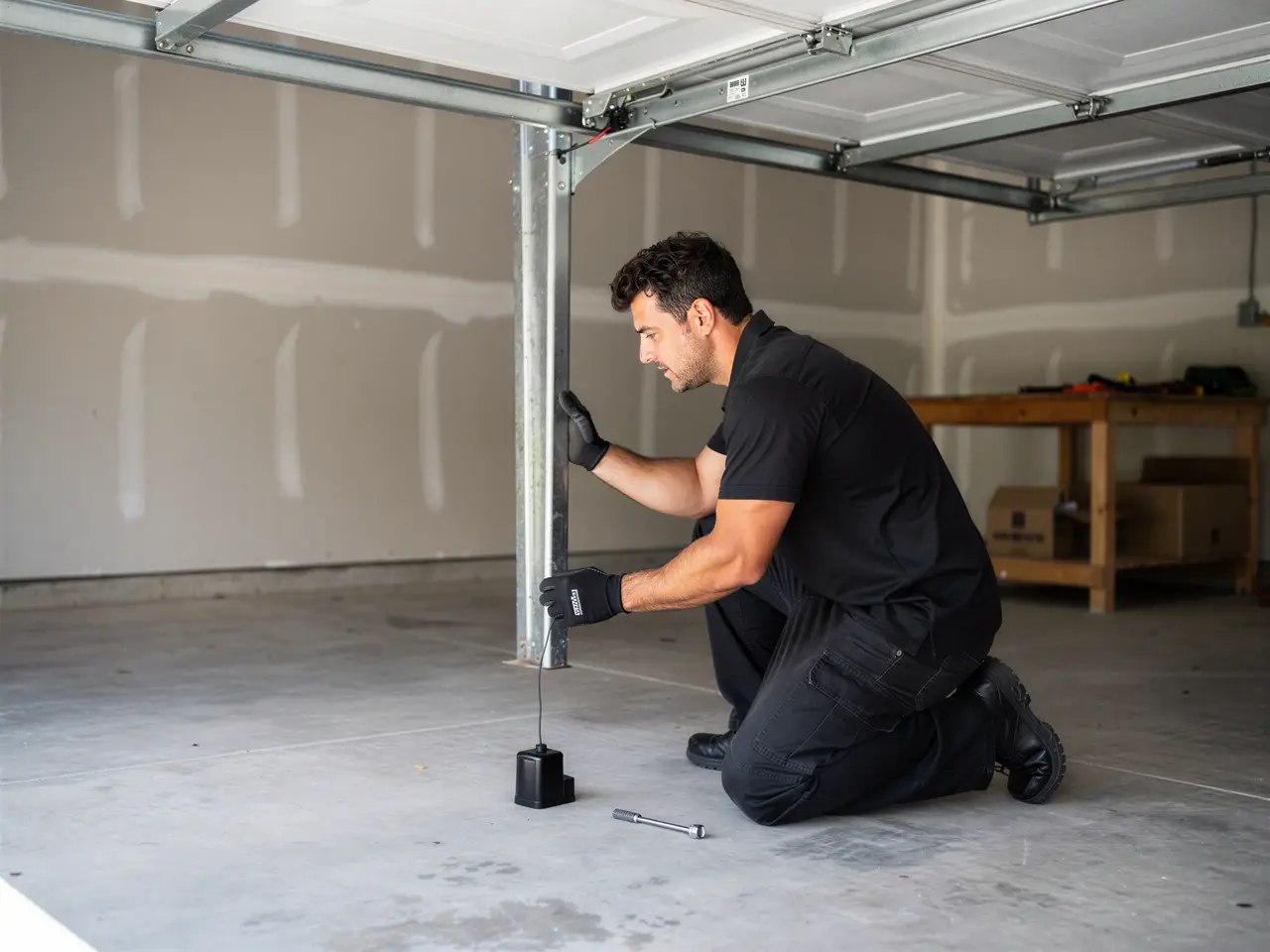
You can do some of this yourself. Wipe down the tracks with a damp rag and check for bends or separation from the wall brackets. Look at the bottom weatherstrip for cracking - in a cold climate like this one, rubber seals harden and split faster than people expect, and a split seal lets wind-driven snow pack up against the door. Spray a light lubricant on the rollers and hinges, not the springs themselves if they're the exposed extension type; those need a trained eye, not grease, because a frayed or over-stretched one can let go under tension.
What you shouldn't do: adjust the spring tension, remove the safety cables on an extension-spring setup, or try to true up a track that's pulled away from a bent bracket. That's where a DIY afternoon turns into an ER visit or a new door.
How It Shows Up
On a house built around 1960, the failure pattern is pretty consistent. Extension springs stretch out of calibration over the years and the door starts closing unevenly, dropping faster on one side. Side-mounted track brackets, original to the house, work loose from framing that's shifted with 60-plus years of freeze-thaw cycles - this area sits in a cold climate zone where that cycle runs hard every winter.
You'll also see weatherstrip failure before anything else. Original bottom seals and sometimes the original flush panel doors themselves were never built with the insulation standards used today, so gaps show up as drafts and, eventually, as moisture getting into the panel seams. Rollers on these older setups are frequently steel-on-steel rather than nylon, which means more noise and faster wear at the track bends.
None of this is unique to one specific house - it's the pattern you get when a neighborhood's housing stock clusters around a single build year. Fayetteville's does, and it's a decade or so older than the area-wide median, which is why the hardware questions here skew toward extension springs and side brackets rather than the torsion setups more common in the newer construction scattered through the rest of the service area.
What It Costs
We don't have a flat number to quote you here, and we're not going to make one up. Cost on a maintenance visit depends on what the door needs once we're looking at it - lubrication and a safety check runs different from a job where an original 1960s track bracket needs to be reset or a frayed extension cable needs replacing before it snaps.
What we can tell you is what drives the cost up on homes in this age range specifically: original side-mount hardware that's no longer a stock part, and bottom seals sized for door profiles that aren't the standard dimension sold today. If your door still has its original panel skin from 1960, parts for it take longer to source than parts for a door installed in the last fifteen years, and that shows up in the bill more than labor time does.
Income levels across the households we serve vary by town, and Fayetteville's median sits below the service-area average, which is one more reason we don't pad a maintenance visit with work the door doesn't need. If a spring adjustment and a lubrication pass solve the problem, that's the invoice - we're not selling you a new opener because the old one is old.
Time on the Job
A standard maintenance visit - lube, track and bracket check, spring tension check, weatherstrip inspection - usually runs under an hour once we're on site. Fayetteville sits about 5 miles from our shop in Chambersburg, so travel time is short and doesn't eat into the appointment window the way it would on a farther call.
If we find a bracket that's pulled loose from the framing or a cable showing fray, that adds time on the spot rather than requiring a second trip, in most cases. Where it does take longer is parts: if your door needs a part sized for its original 1960s hardware rather than a modern stock size, we may need to order it, and that's the one honest delay we'll tell you about upfront instead of promising same-day on something we can't guarantee.
Getting It Booked In
We run maintenance visits out of Chambersburg and cover Fayetteville as part of that route, about 5 miles out. We don't keep a branch or a crew stationed in town, so we schedule the visit rather than offering a walk-up or same-day drop-in - that's the honest version of how this works, not a promise we can't back.
Good times to book: before the first hard cold stretch each winter, since that's when hardened seals and stiff extension springs tend to announce themselves, and once a year as a baseline check regardless of season. If your door is original to a house built right around 1960, it's worth getting an inspection even if nothing's visibly wrong yet - the hardware from that build era doesn't fail gradually and politely, it fails during the stretch of cold when you need the door most.
Parts We Carry
For maintenance calls in this age bracket, we carry the common wear items: rollers, standard-width bottom weatherstrip, lubricant rated for cold-climate use, and hinge and bracket hardware sized to fit both older side-mount track systems and newer torsion setups. These cover the bulk of what a 1960-era door needs on a routine visit.
What we don't stock on the truck: exact-match panel skins or track sections built to original 1960s dimensions. Those were never standardized the way current door sizes are, and when a Fayetteville house needs one, we order it rather than guess with a near-fit part that'll bind or rattle. We'd rather tell you that upfront than sell you a part that doesn't actually fit the door you've got.
Frequently asked questions
How old is a typical garage door in Fayetteville?
Houses in Fayetteville went up mostly around 1960, so original doors and hardware in that stretch of the neighborhood are pushing past 60 years old. That's a decade or so earlier than the median build year across the rest of the area we service, which is why spring and bracket hardware here skews toward older extension-spring, side-mount designs.
Do you have a shop or crew based in Fayetteville?
No. We run out of Chambersburg, about 5 miles away, and schedule maintenance visits to Fayetteville as part of that route. We don't offer same-day walk-in service here - book ahead and we'll work out a time.
Why does cold weather matter so much for maintenance here?
This area sits in a severe cold climate band, and that cycle is hard on rubber weatherstrip and spring tension year over year. Seals that look fine in summer often crack once temperatures drop, and older extension springs lose calibration faster under repeated cold stress than newer torsion setups.
Can I just replace parts myself on an older door?
Lubricating rollers and hinges is fine to do yourself. Adjusting spring tension or working on extension springs and their safety cables isn't - on a door this age, a frayed or over-tensioned spring can let go with real force. That's the one place we tell people to call rather than DIY.
More garage door services in Fayetteville
Book garage door service in Chambersburg
Call now or request a quote - tell us what the door is doing and where you are.