
Chambersburg, PA · Garage Door Service
Panel Replacement for Mont Alto's 1969-Era Doors
Mont Alto's homes cluster tightly around 1969 construction, unlike the wider mix across the Chambersburg service area. See why that changes panel replacement here.
- Repairs & new doors
- Springs & openers
- Serving 6 nearby communities
Time on the Job
Across the wider Chambersburg service area, houses went up anywhere from 1938 to 1998, with the median landing around 1970. Mont Alto doesn't spread out like that. The 616 households here cluster much tighter, centered right around 1969, which means a much more uniform run of garage doors than you'd find in a neighborhood with 1940s farmhouses sitting next to 1990s builds.
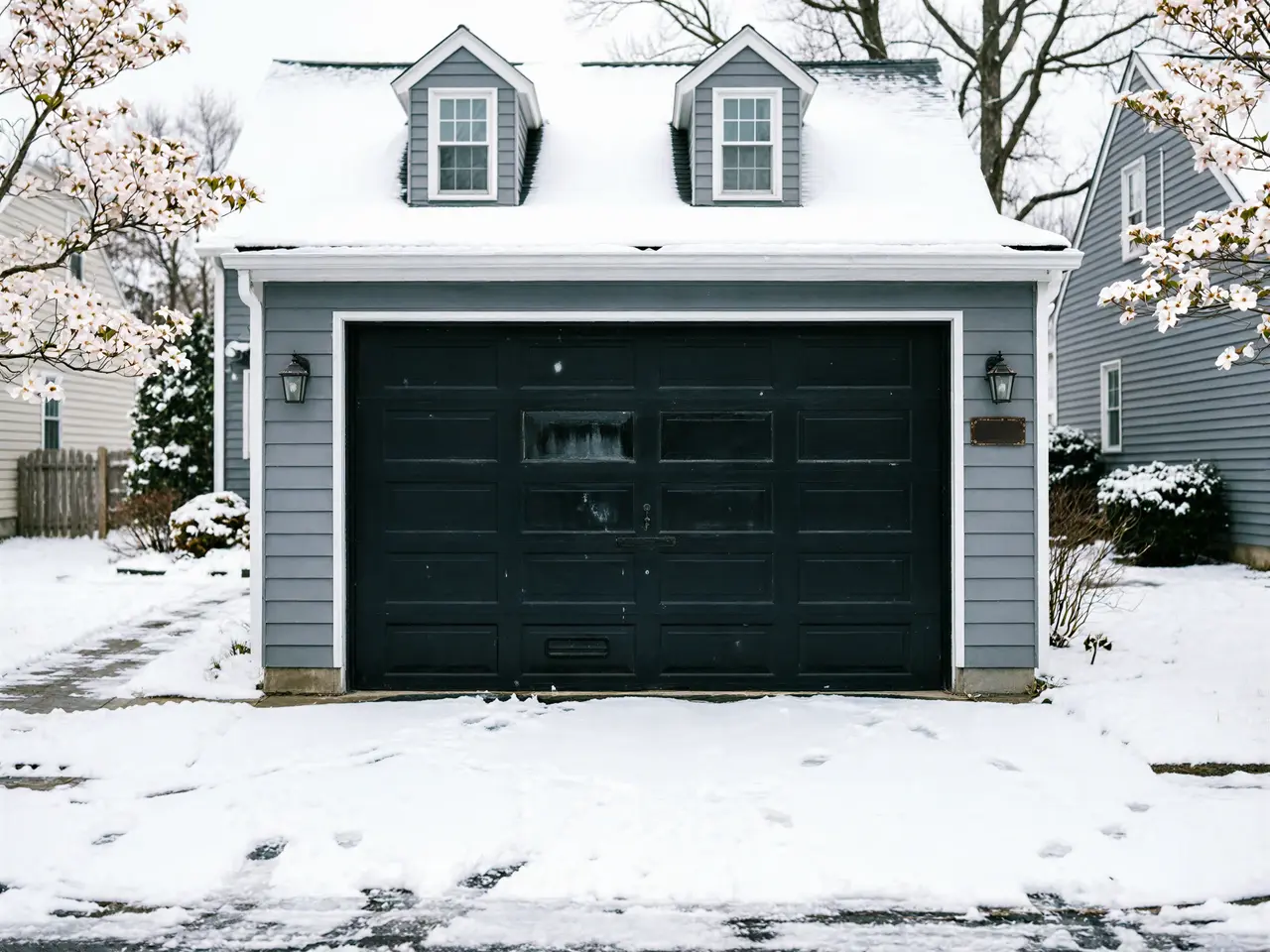
That uniformity matters when a panel cracks or gets caved in. A tech coming out from Chambersburg, eight miles up the road, isn't guessing at three different eras of door on one street. He's looking at the same basic steel sectional construction that dominated residential garage doors through the late 1960s: wider panel seams, heavier gauge steel than what gets installed today, and hardware sized for doors that weigh more per square foot than current models.
The tradeoff is availability. Doors from this build wave often used panel profiles and section heights that newer manufacturers don't carry off the shelf anymore. Matching a single damaged panel to the three or four still-good ones next to it sometimes takes a special order rather than a same-day pull from stock.
How It Shows Up
On a 1969-era door, panel failure rarely looks like one clean dent. The steel from that period doesn't flex and spring back the way thinner modern panels do - it bends and stays bent, so a car bumper tap or a wind-driven branch tends to leave a crease that runs the width of the section.
You'll also see the hinges pull loose from the panel edge before the panel itself tears, because the steel around the screw holes has had fifty-plus years of expansion and contraction to work the metal fatigued. Water intrusion at the bottom panel is common too - original weatherstripping from that construction wave is long gone, so the lowest section often shows rust-through at the corners before anything else fails.
Given Mont Alto's climate band - cold with severe swings - that corrosion pattern accelerates. Repeated freeze-thaw cycling on a panel that's already thinned from age moves a small rust spot to a structural hole faster than it would in a milder climate.
Why This Fails Locally
The median household income across the service area sits at $74,723, and Mont Alto tracks close to that line. That income level generally supports a repair-first approach rather than full door replacement - which is the right call more often than not on a sound 1969-era frame with one bad panel.
But the math only works if a matching panel exists. With a door built in the uniform 1969 wave that defines this suburb, you're not dealing with a door style still in current production. Section height, panel width, and the ribbing pattern on these older steel doors frequently don't match what a big-box supplier stocks, so the job becomes either a special-order panel with a wait, or a decision to replace the full door instead of chasing one piece.
That decision point is where this fails differently than it would in a newer part of the service area. A homeowner in a section built in the 1990s can usually get a drop-in matching panel within days. In Mont Alto, with its older, more consistent 1969 housing stock, that option isn't guaranteed, and pretending otherwise before ordering parts sets up a bad surprise.
Doing It Yourself
If the damage is cosmetic - a shallow dent that hasn't cracked the paint or bent the panel seam - you can sometimes push it out from the inside with a block of wood and a mallet, working slow so you don't stretch the steel further. That's about the limit of what's safe to try solo.
Don't touch anything involving the panel closest to the spring system or the panel with the opener bracket mounted on it. Pulling the wrong screws on a torsion-sprung door built in this era can let stored tension release suddenly, and that's not a risk worth the money saved.
We'll be honest about the other limitation here too: if the panel profile on your door has been discontinued, we can't promise a quick turnaround. We'll tell you up front if it looks like a special-order situation before we quote the job, rather than finding out after the panel's been pulled.
Frequently asked questions
Why is it harder to find a matching panel for my Mont Alto house than for a newer home nearby?
Mont Alto's housing stock centers tightly around 1969, while much of the broader service area spans 1938 to 1998 construction. Doors from that 1969 wave used panel profiles and steel gauges that current manufacturers often don't stock, so a single replacement panel sometimes needs a special order instead of a same-day match.
Does the cold weather here make panel damage worse?
Yes. The area sits in a cold climate band with severe swings, and freeze-thaw cycling speeds up corrosion on older steel panels, especially at the bottom section where weatherstripping has typically failed. A small rust spot on an aging panel can turn into a structural hole faster than it would somewhere milder.
Is it cheaper to replace one panel or the whole door?
On a sound frame with good hardware, replacing one panel is usually the cheaper route, and the income level in this area generally supports that repair-first approach. The exception is when the panel profile is no longer made - at that point, a special order can cost close to what a full door replacement runs.
How far out does Chambersburg Garage Door Pros travel for this kind of job?
Mont Alto sits about eight miles from Chambersburg, inside the regular service area. We don't keep a branch or depot in Mont Alto itself - the crew and truck come out from Chambersburg for every call here.
More garage door services in Mont Alto
Book garage door service in Chambersburg
Call now or request a quote - tell us what the door is doing and where you are.